How Analytics Are Transforming Game Creation on Astrocade
Astrocade
May 30th, 2026
Loading...
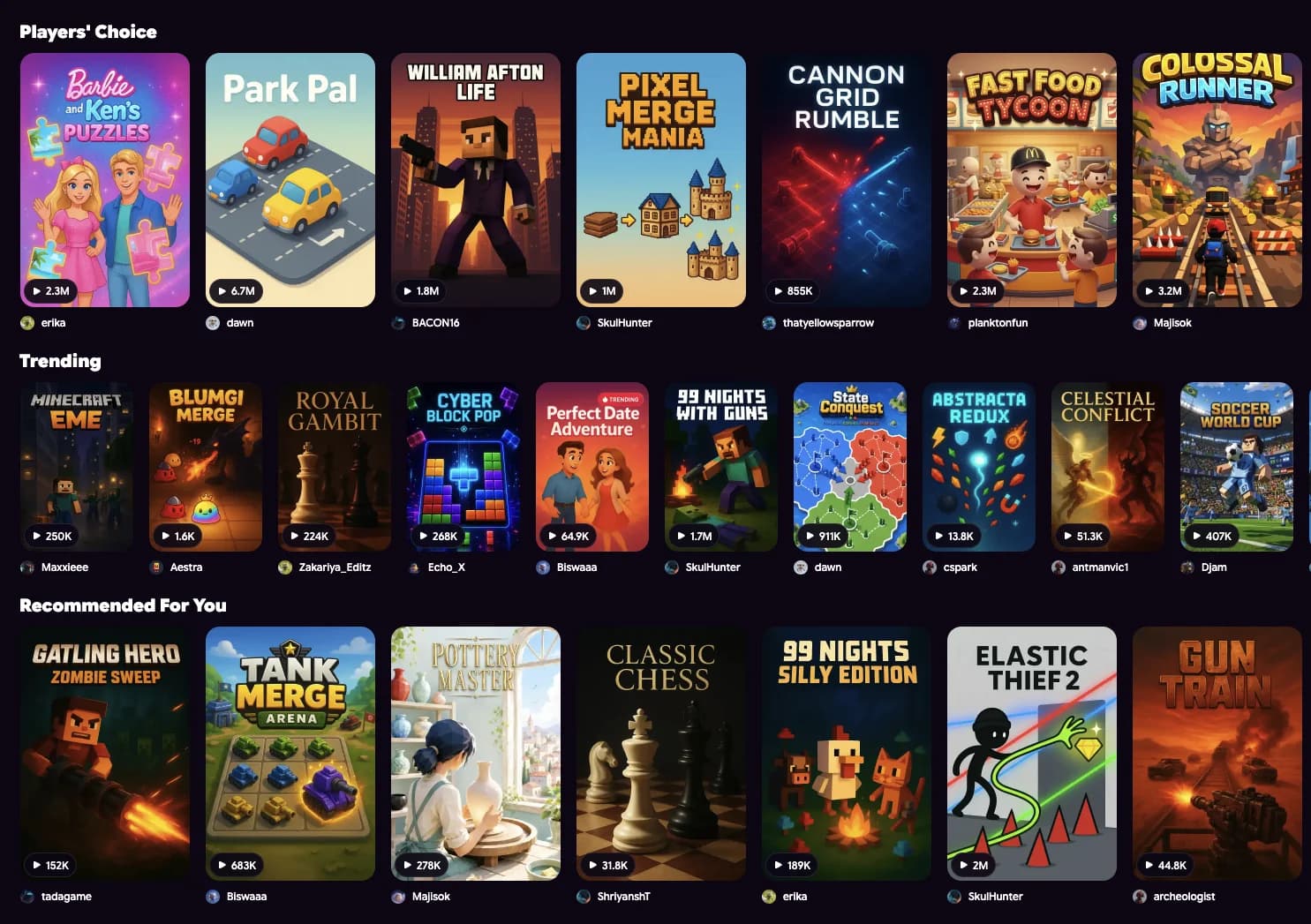
Building Astrocade means taking another step deeper into the unknown with each new day. The very concept of generating casual games via AI is a brand-new frontier, after all, and most people — including most of our users — have never done anything like it before. That isn't holding anyone back, though: our community publishes literally thousands of games every day, orders of magnitude more than any game platform in history.
Even still, getting our creators' games in front of players is only half the battle; ensuring they're actually fun is where the real challenge begins. Our games are continuously tracked and ranked based on player reaction, with factors like median playtime (among many others) determining where a game appears in our gallery, how often it shows up when swiping through the feed, and playing a major role in our ever-evolving recommendation system. To figure out where a brand-new game stands, we don't just let it sit there waiting to be found; instead, we immediately present it to a random slice of our global audience for instant play-testing. This alone is one of our standout features: for the first time, anyone with an idea can make a game, publish it, and get immediate feedback from real people. It's a fast-paced ecosystem, though, and it comes with a catch — games that fail to engage players in their first day or two risk being delisted.
To help creators survive this initial trial and thrive in the long run, we provide a comprehensive analytics dashboard. At a glance, creators can review any of their published games to find real-time visibility into total plays, significant plays (those lasting at least 30 seconds), and a breakdown of play session lengths across specific intervals: 0–10 seconds, 10–30 seconds, 30–60 seconds, 2–5 minutes, and 10+ minutes.
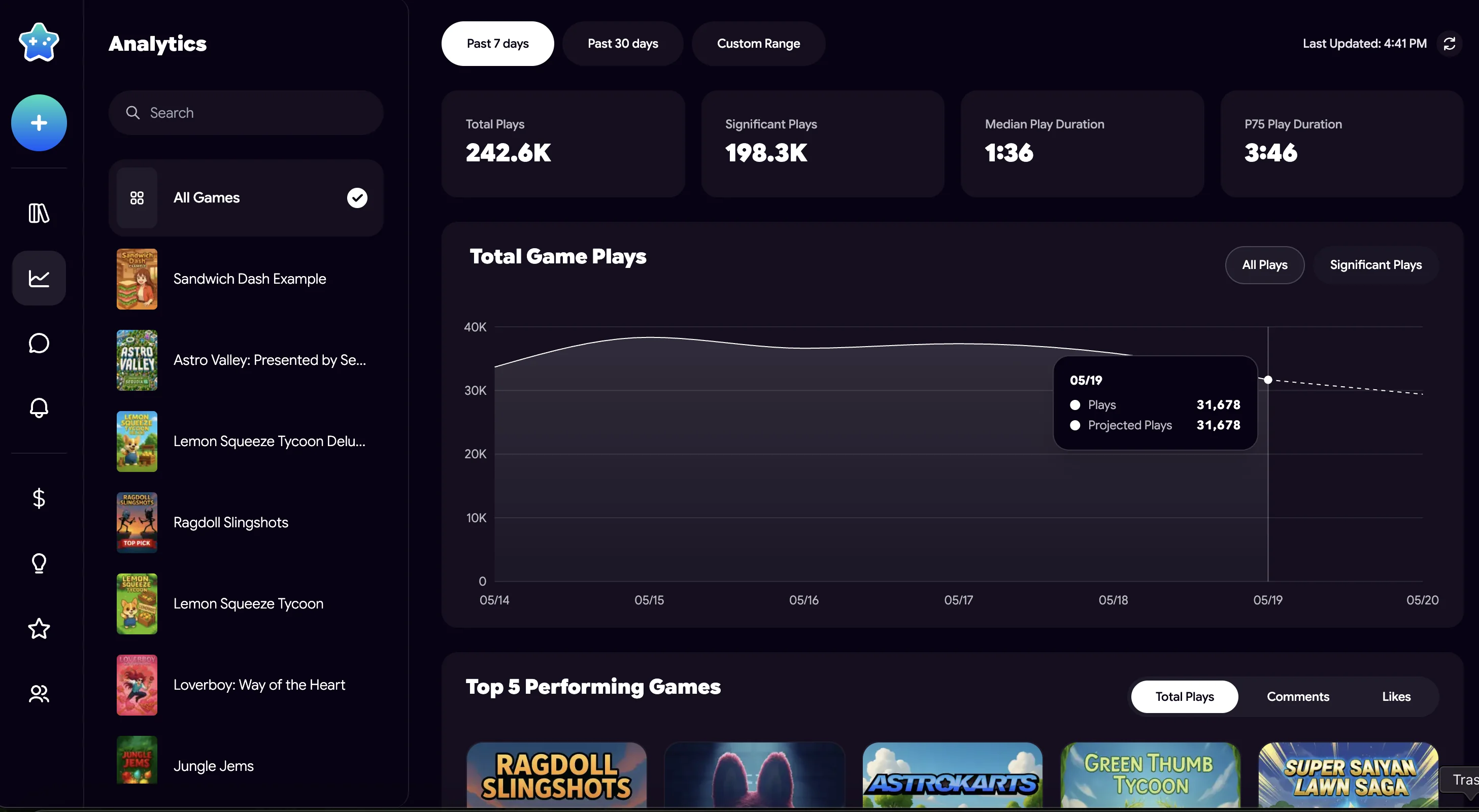
Instead of just handing over raw data, we want to help creators understand what these numbers actually mean for their game's design. Imagine seeing a massive spike in players dropping off within the first 10 seconds, for example. That usually tells us there's a download barrier. Since wide swaths of our audience struggle with less-than-ideal internet connections, a long loading time tempts players to bail before the game even starts. Unsurprisingly, our highest-performing games provide a smooth, fast experience regardless of connection speed.
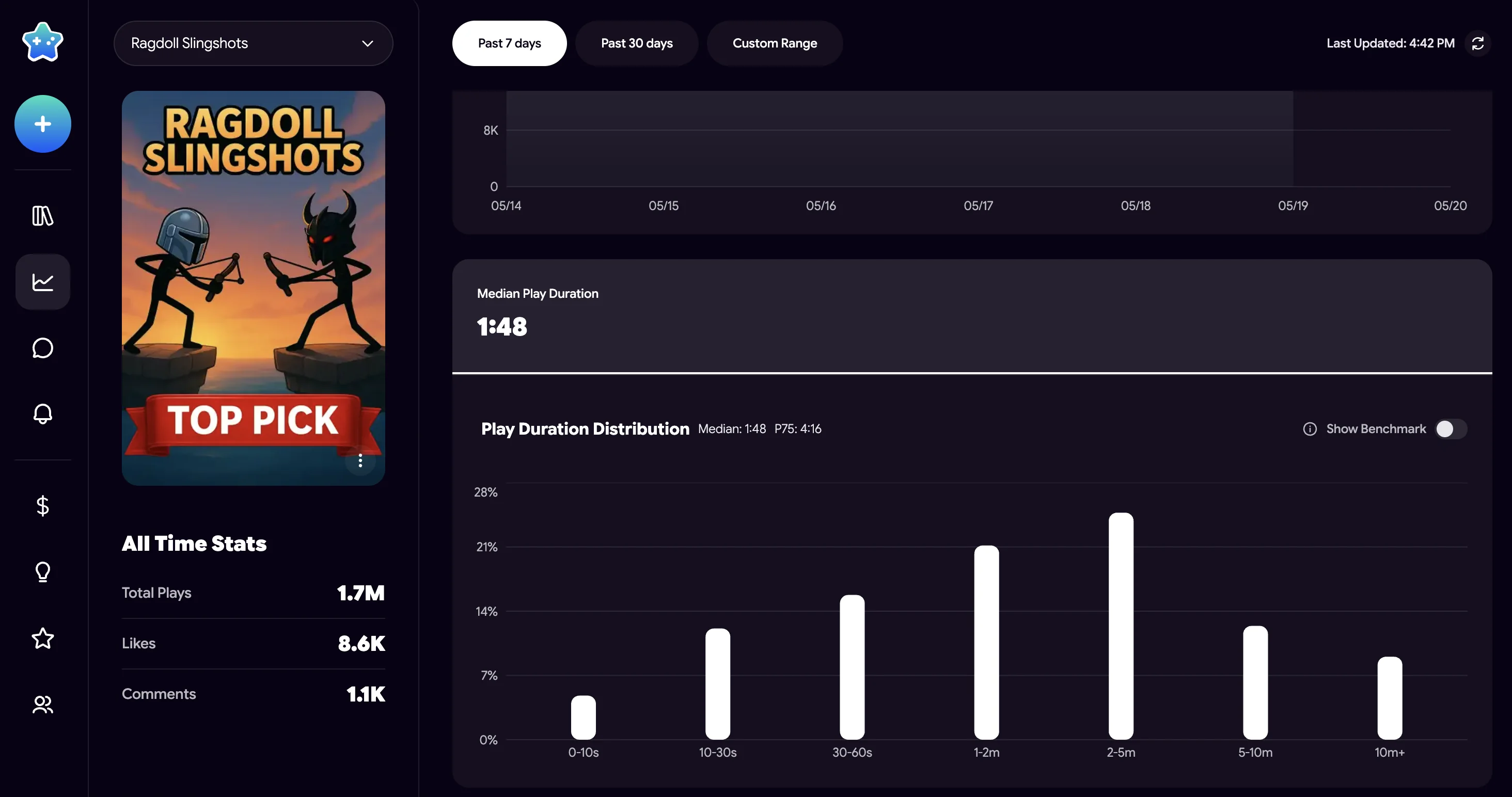
If the drop-off happens a little later — say, between 10 and 30 seconds — the game's likely making a bad first impression. The creator might've included a wall-of-text tutorial (perhaps even in a language the player doesn't speak), an unskippable lore intro, or confusing controls that turn what should be quick fun into an instant bummer.
Now consider players who stick around for 30 to 60 seconds before leaving. At this point, they're engaging with the core mechanics, but finding them lacking. The game might be too easy, too hard, or simply unsatisfying to play. It could also mean the game's performing poorly, with a low frame rate, unresponsive controls, or both. Many of our global players rely on older-gen mobile devices, which, again, is why our best games generally run well across the board.
Finally, if there's a distinct lack of players making it to the 2-to-5-minute or 10+ marks, the game probably lacks staying power. The initial hook might've worked, but a lack of progression, content, or novelty means players have no reason to stick around.
Giving creators access to this data is one kind of investment in their success. Teaching them how to use it is another. That's why, through our Astro Academy course, we teach creators how to interpret these analytics to diagnose issues with game performance. More importantly, we teach them how to think like real game designers, wired to avoid these pitfalls in the first place.

Platforms like YouTube revolutionized content creation by giving video makers deep analytical insights into their viewers, and many have followed suit over the years. But Astrocade's unique combination of code-free game creation, instant distribution to a world of players with the click of a button, and a fast-paced, highly competitive environment means that we're once again breaking ground in uncharted territory. That also means we're just beginning. Today's dashboard is a powerful but accessible step toward understanding what players want — and we have much, much more planned.
By equipping first-time game makers with the tools to iterate and improve based on real data, we keep our incentives aligned with our creators: they want to make the best games they can, and we want to push them to every player on Earth likely to enjoy them.