



LESSON 1
Thinking Like a Casual Game Designer
4 min read
Intro
Want to make Astrocade's next viral hit game? The first step is getting in the right state of mind.
Many of our best-performing games can be described as casual and mobile-friendly. They're simple, easy-to-learn games designed for short, flexible play sessions on phones and tablets. They feature intuitive controls, familiar formats, and short-term goals to offer quick, easy fun that anyone can pick up and enjoy.
This lesson is intended to get you thinking like the creators that make them.

TERM TO KNOW
“Game Mechanic”
In game design terms, a game mechanic is an action the player can take to interact with the game, as well as how the game responds. You can think of it as a "verb" — a thing the player does.
Examples of classic game mechanics in casual games include matching colored pieces (Candy Crush Saga, Royal Match), merging items to create something new (Merge Mansion, Gossip Harbor), or pulling back a slingshot to launch a projectile (Angry Birds).
Some classic casual game mechanics
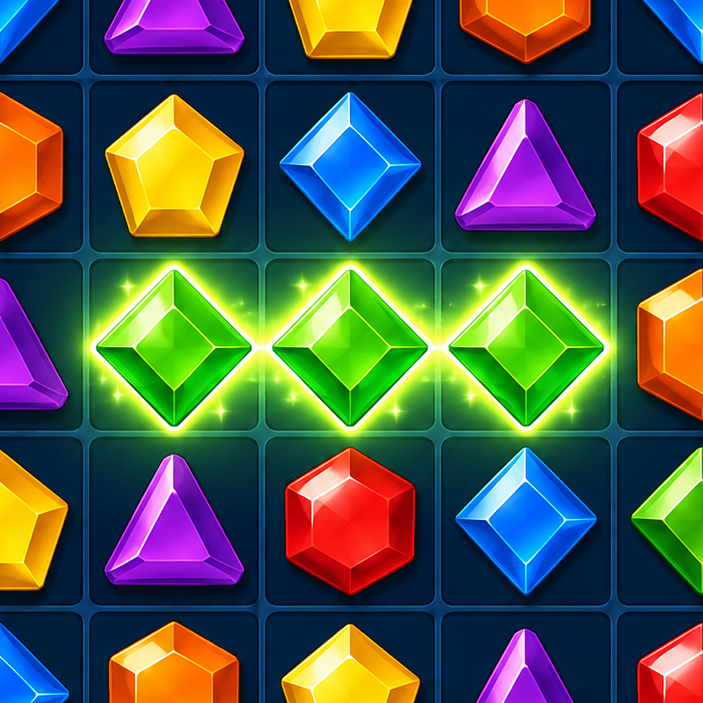
Matching
Aligning game pieces that have something in common (color, shape, size, etc.)

Merging
Combining two or more of the same thing to create something new.
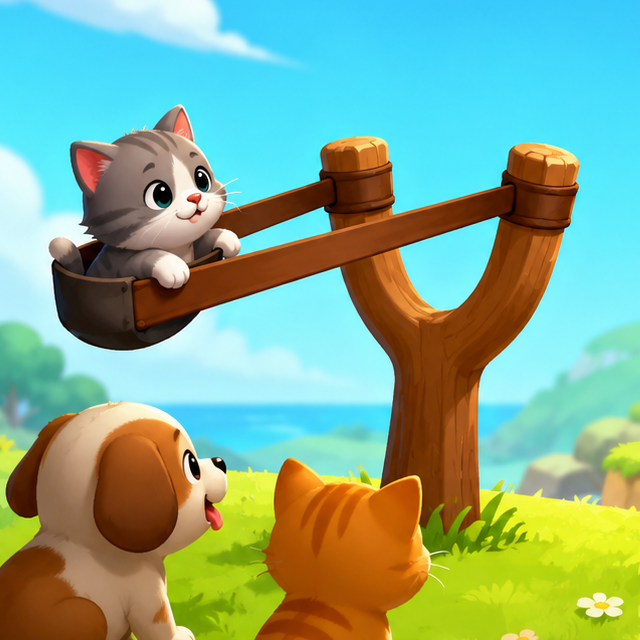
Launching
Firing something along a trajectory, often with a pull-back-and-aim motion.
Many of these features are related to how fast the player gets to the action, which brings us to our next term to know—and one of the most important in all of gaming!
TERM TO KNOW
“TTF (Time to Fun)”
TTF, or Time to Fun, refers to how long it takes to experience something fun and satisfying, starting from the moment the player taps the play button. On Astrocade, the ideal TTF is around 5-15 seconds.
And remember, on Astrocade, TTF doesn't start when the game itself begins, but when the game download begins. If your loading screen takes 45 seconds to download (perhaps on a slower internet connection), that's part of your TTF, no matter how fast the game itself gets going!
So what kind of TTF is ideal for an Astrocade game? I'm so glad you asked...

5-15
Seconds
The ideal TTF (Time to Fun) for an Astrocade game.
If that seems like a challenge, it often is! But it's a challenge well worth confronting.
The recipe for making a casual, mobile-friendly game
Of course, game mechanics are just one aspect of what makes casual games successful. Let's take a look at the rest of the recipe:
- A simple game mechanic (and usually just one!) that lends itself to addictive, repetitive play.
- Easy, quick onboarding, with fun, interactive tutorials (when necessary).
- The fastest possible download time.
- Minimal distractions or extraneous features.
- A "guaranteed win" that gets the player off to an easy, satisfying start.
- Thoughtful, well-tuned progression designed to hook and engage.
Casual games are also known for provoking a familiar range of emotions in their players:
- Mastery: Feeling as if you're good at some special ability and getting better (usually related to the core game mechanic).
- Autonomy: The feeling that your choices matter.
- Connectedness: In the case of multiplayer games, a sense of being part of a community.
- Curiosity: A desire to explore, or simply an unpredictable outcome.
- Humor/cuteness/silliness: A light-hearted, fun, whimsical tone. Casual games are rarely dramatic, serious, or realistically violent.
The remainder of this course is dedicated to teaching how to achieve all of these qualities in your own games.
The mentality of casual game creators: TEST, TEST, TEST!
Many of our best creators are known for fast iteration and a willingness to adapt and try something new. They create new games fast, test them regularly and often, and don't move on to refinement and polish until they see clear signs of player engagement.
This is true beyond Astrocade as well. For example, casual gaming giant Voodoo tests upwards of 2,000 game prototypes every year!
Later in this course, we'll lay out a process for testing your games. For now, just keep these three words in mind: test, test, test!

Onward, cadet! To the exercises!
Exercise
Casual Game Teardown

Click here
Our first exercise will help you develop an instinct for evaluating the fundamentals of every game you play.
First, pick a successful Astrocade game, such as any of those found in the Players’ Choice section. Then, using a stopwatch, determine the game's TTF by timing exactly how many seconds it takes from starting the game (clicking the thumbnail and beginning the download/page load process) to executing the primary core mechanic. Continue playing for at least a few minutes.
Quiz
Lesson Recap
Click here
Finally, to complete this lesson, check out the linked form for a simple recap quiz that tests your knowledge of this lesson's most important concepts.
Don't worry, it's easy (and open book 👀)!