


LESSON 4
Juicing it Up: Gameplay You Can FEEL
9 min read
Intro
“Juice” is the industry term for all the details and refinements that take a good game mechanic and make it addictive, memorable, and fun on a deep, visceral level. This is a broad topic, but for the purposes of this lesson, we’re going to focus on two kinds of juice: visual and physical. This lesson breaks down the various forms of juice and polish you should consider, explains how to decide which effects to include, then demonstrates the process step by step in our example game, Balloon Buster.
Juice is often visual. Sometimes it enhances the way interactions between objects feel, making physical properties like speed or friction more noticeable. Other times it’s pure eye candy, bringing to life magic powers or futuristic technology.
Examples of Visual Juice Effects
Examples of visual juice effects include:
- Glows and tints: A halo of colored light around an object that suggests magic, energy, or heat, or a consistent color tint applied to objects or the screen.
- Particle systems: A huge family of effects in which particles are spawned in various styles and directions to convey fire, plasma, liquid, steam, and countless other things.
- Squash and stretch: Cartoon-like exaggerations in which an object elongates when moving fast or compresses when coming to a sudden stop.
- Shaking: Applied to the entire screen or individual objects for a sense of violent impact, or pent-up tension.
Examples of Physical Juice Effects
Beneath the visuals, of course, games are usually about objects that move and interact. Juice is often applied to the nature of those interactions as well.
Examples of physical juice effects include:
- Gravity and bounce: Objects should gain speed as they fall and bounce in lifelike arcs to suggest their materials: light objects like basketballs or coins may bounce in high arcs, while heavier things like statues or boulders land with a more static thud.
- Overshoot: A moving object can travel slightly further than its intended target before snapping back to suggest personality, humor, or just a clunky mechanical nature.
- Ease in and out: Rather than moving in perfect linear paths with abrupt starts and stops, moving objects should often gradually speed up and slow down.
Some very juicy tutorial videos
As a side note, check out these tutorial videos if you haven’t already! They aren’t directly about juice in the way this lesson is, but they cover some useful, related techniques:
Juicing up Balloon Buster
Now that we’ve learned a bit of the theory behind juice, let’s see it in action by applying it to our example game. Remember, it’s only because we’ve tested the game mechanic to the point of confidence in its appeal that we’re taking the time to add any of this! Until you’re sure your game mechanic is resonating with players, do not proceed to this step.
How to formulate a "Juice Plan"
There are a million ways to juice up a game. So how do we decide what’s right for ours?
Generally speaking, juice should heighten the core mechanic, not distract from it. So rather than simply layering effects for the sake of flashiness, let’s break down what the game is doing—especially how you want the player to experience those things—and work from there. Try to identify the feeling or sensation you want to associate with each, and see which effects can help you achieve them.
In the case of Balloon Buster, the key elements of the game mechanic are clear:
- The tension of pulling back the slingshot
- The speed of the rock flying through the air
- The impact of collisions between the rock and the balloons, stone blocks, and the ground
The plan: Balloon Buster juice
We’ve now got three clear sensations that we want to convey, which makes it much easier to decide what exactly to add or change about the game:
Tension
The slingshot (along with the rubber band and the rock) should shake, or tremble, depending on how far back the player pulls, suggesting that more and more force is being pent up, ready to explode upon release.
Speed
A motion trail behind the rock can suggest high speed relative to the gentle drifting of the balloons.
Impact
Since the game mechanic includes numerous impacts, this will turn into multiple effects: The stone blocks should shake when struck and release fragments, the balloons should pop more dramatically, with bigger shreds in the balloon's color, and the screen should shake when the rock hits the ground.
The plan: Balloon Buster polish
While we’re at it, we might as well throw in some visual upgrades as well. The following changes aren’t “juice” in the most technical sense—they’re simply “polish”, as they aren’t directly related to the feel of the game mechanic itself—but they’re related, in that they make the game more appealing without changing its functionality.
Here are some clear polish opportunities to elevate our demo:
- A lush background to replace the blank sky and simple rectangular ground, as well as a more detailed replacement for that clunky AI-drawn slingshot.
- Drop shadows below the objects (balloons and flying rocks) to make the scene feel more real and connected.
- A glowing, color-shifting effect applied to the trajectory line to make it stand out more.
Juice wishes in action: Conveying a sense of tension
The slingshot should shake as a function of how far the rock is pulled back. No pull back = no shake, max pull back = max shake.
Fixed! The rubber band and rock now shake along with the slingshot as you pull back.
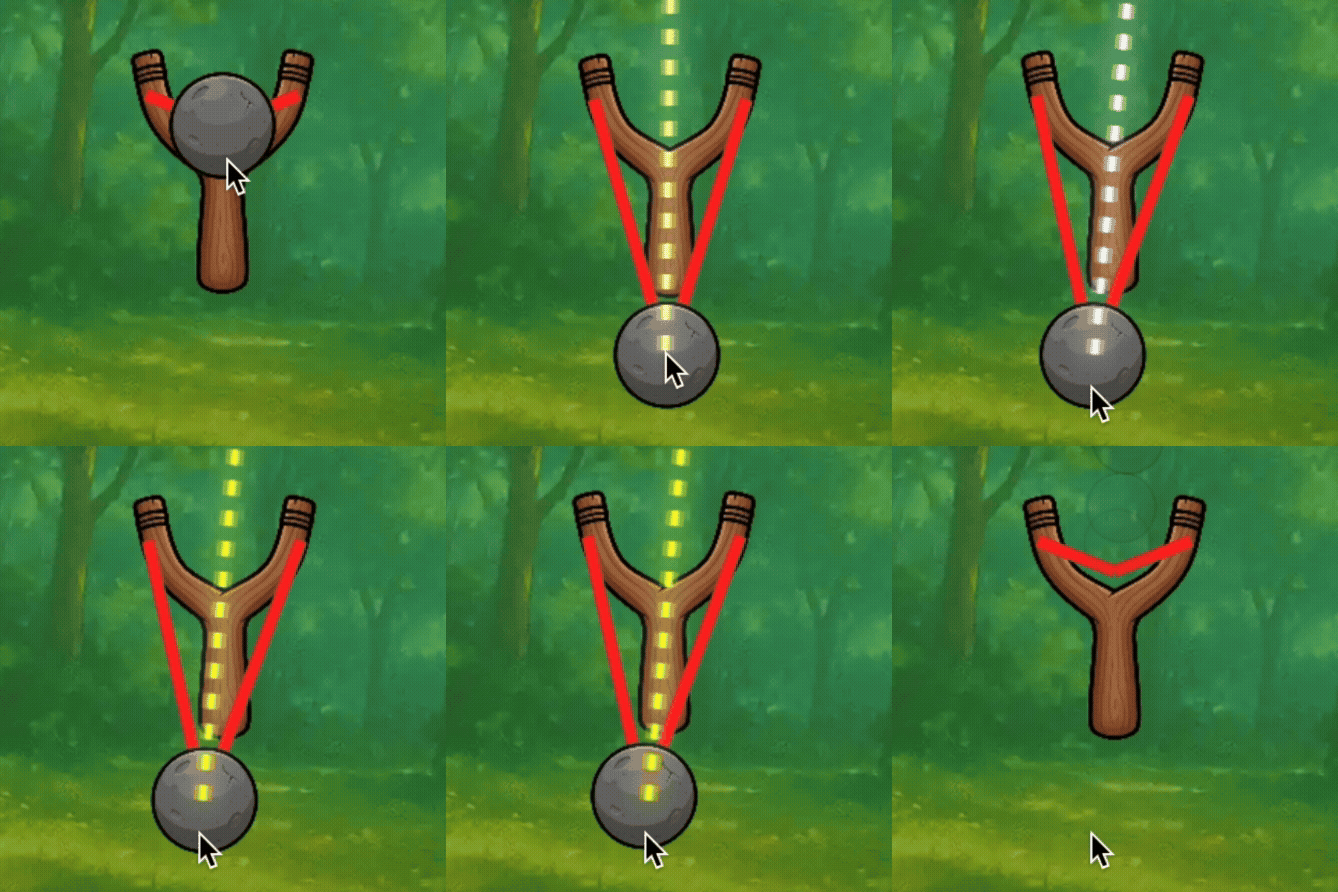
The slingshot should shake as a function of how far the rock is pulled back. No pull back = no shake, max pull back = max shake.
Fixed! The rubber band and rock now shake along with the slingshot as you pull back.
Juice wishes in action: Conveying a sense of speed
Your rock now leaves a satisfying motion trail as it flies through the air! 🚀
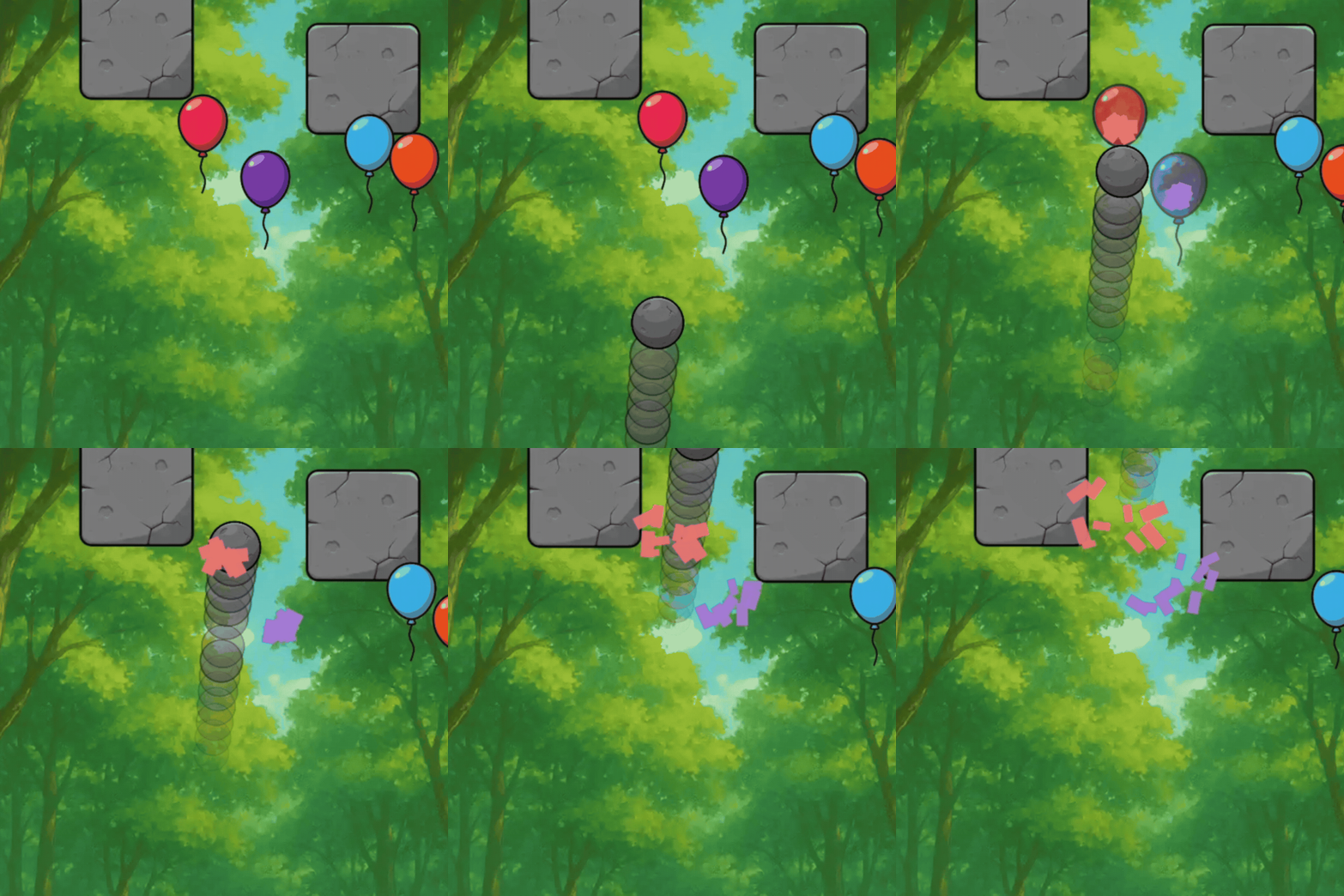
Your rock now leaves a satisfying motion trail as it flies through the air! 🚀
Juice wishes in action: Conveying a sense of impact
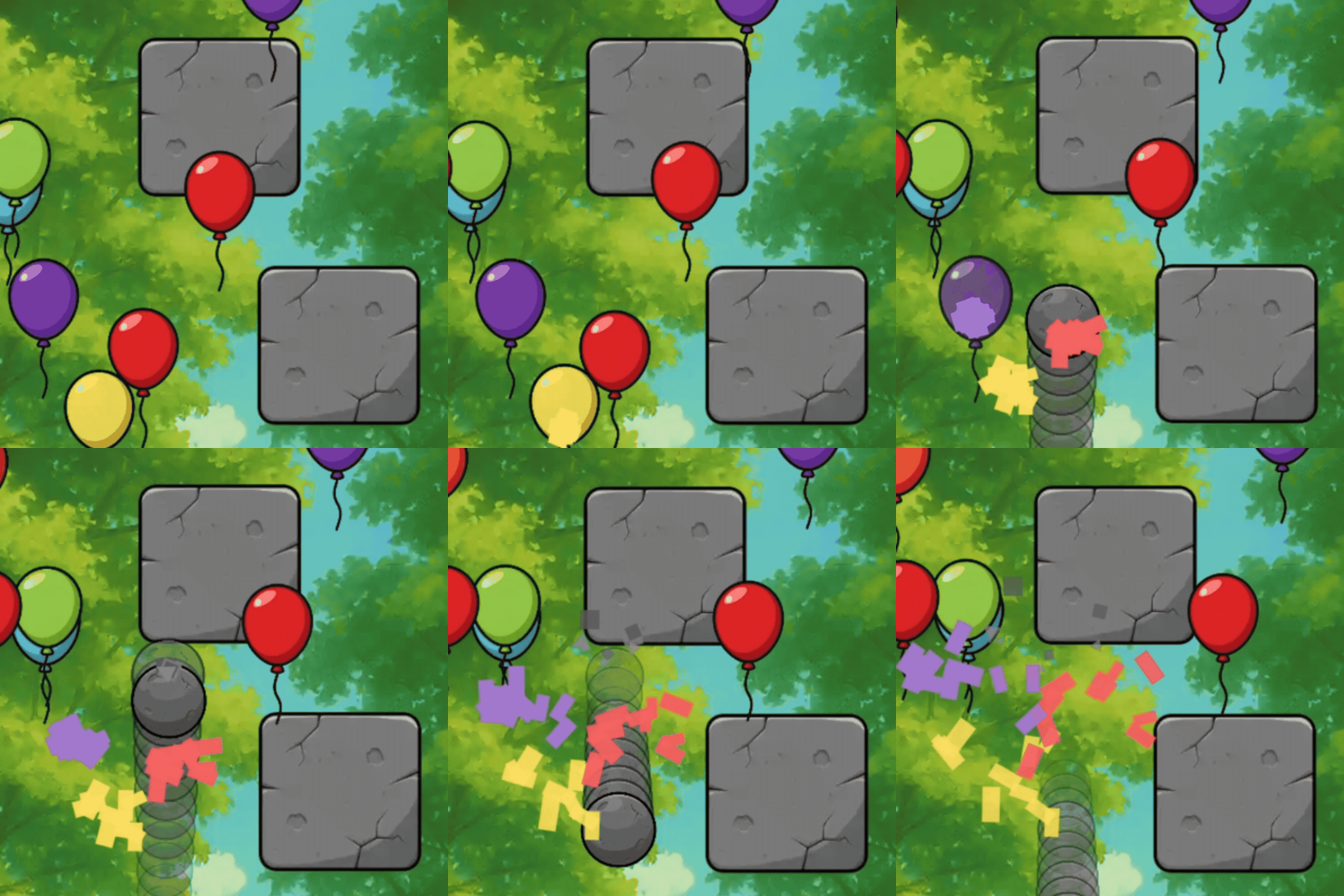
Juice wishes in action: Making the trajectory stand out
The trajectory line that appears while I'm pulling back the rock should glow and smoothly oscillate between pure white and bright yellow
The trajectory line now glows and smoothly pulses between white and bright yellow—looks incredible! ✨
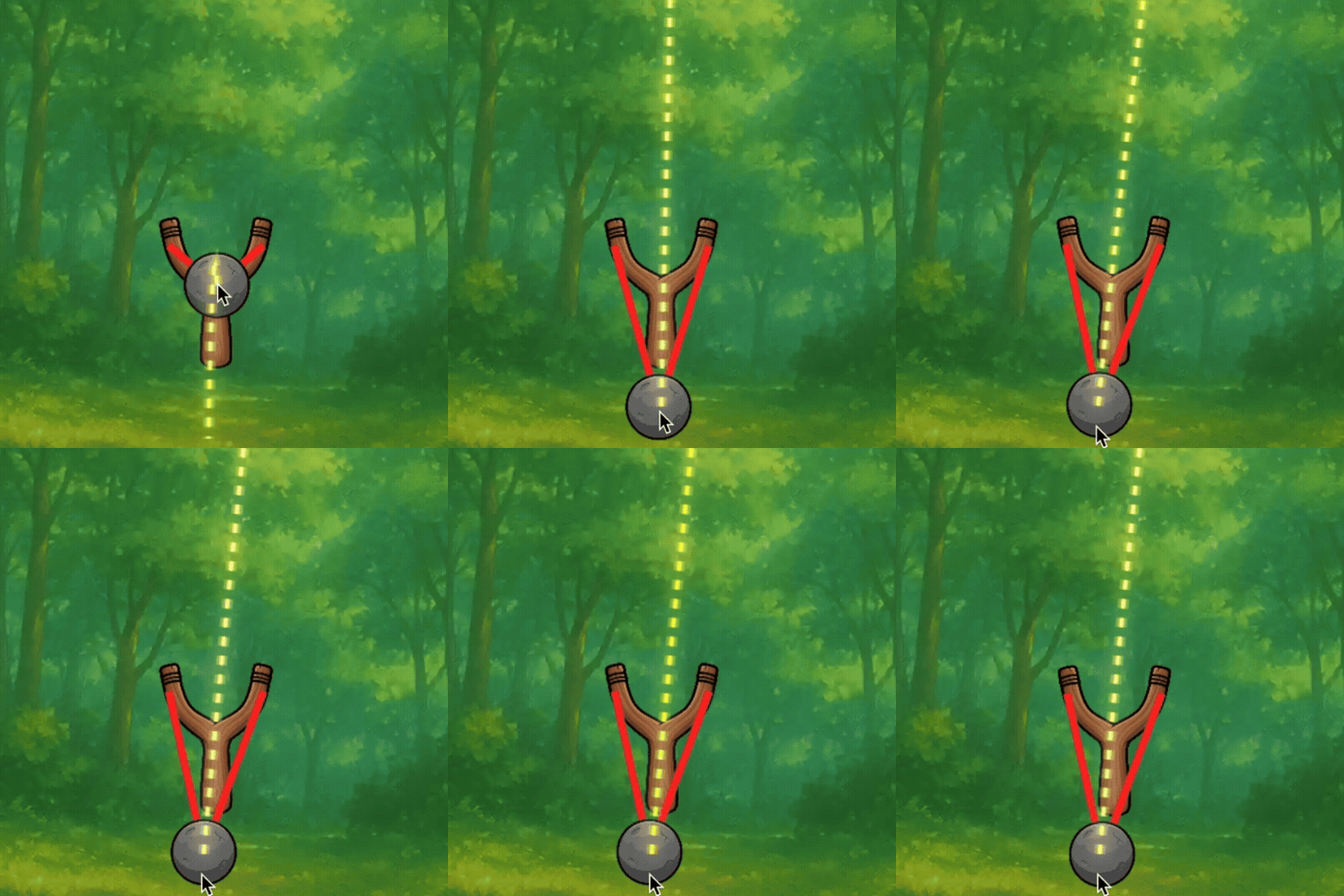
The trajectory line that appears while I'm pulling back the rock should glow and smoothly oscillate between pure white and bright yellow
The trajectory line now glows and smoothly pulses between white and bright yellow—looks incredible! ✨
Juice wishes in action: Adding drop shadows
Draw a drop shadow (a 50% transparent ellipse that's always located at the lowest point the ball can occupy. It should follow the ball's X-axis location exactly but should always remain at a fixed y-axis point.
The forest floor now shows through beautifully, and your rock casts a shadow that follows it across the ground! 🌲
Great, but the drop shadow should be 60% smaller (and move it 20px lower). It should be visible ANY time the rock is visible (from the moment it appears in the slingshot). Also, scale the drop shadow down based on the height of the rock; at the top of the screen, the drop shadow should be half its size (minimum) when the rock is on the ground (maximum).
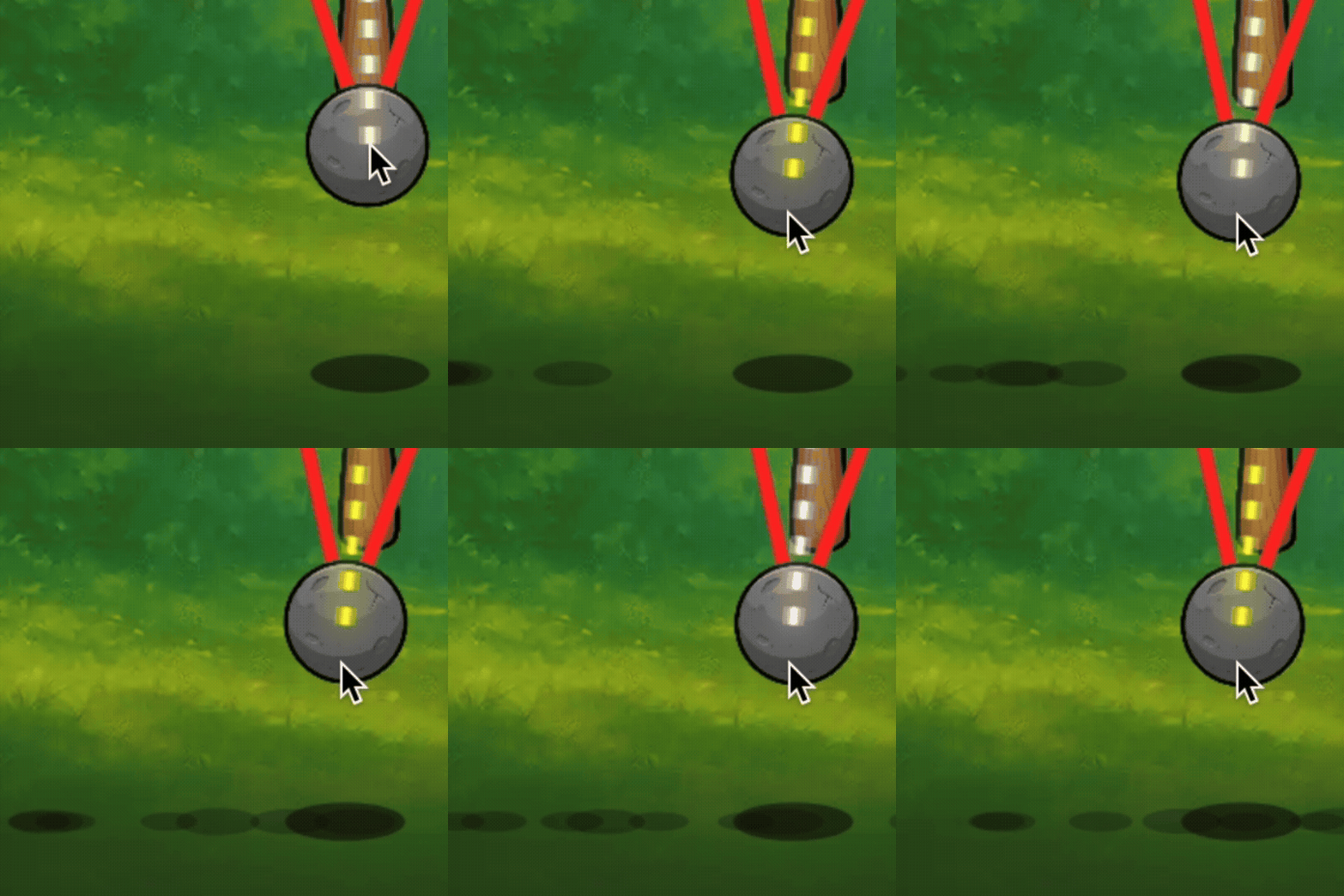
Draw a drop shadow (a 50% transparent ellipse that's always located at the lowest point the ball can occupy. It should follow the ball's X-axis location exactly but should always remain at a fixed y-axis point.
The forest floor now shows through beautifully, and your rock casts a shadow that follows it across the ground! 🌲
Great, but the drop shadow should be 60% smaller (and move it 20px lower). It should be visible ANY time the rock is visible (from the moment it appears in the slingshot). Also, scale the drop shadow down based on the height of the rock; at the top of the screen, the drop shadow should be half its size (minimum) when the rock is on the ground (maximum).
The juice-up: Before and after
And here’s the result! Although the core game mechanic is virtually identical here (I’ve yet to implement any of my test subjects’ proposed changes), the juiced-up version feels like an entirely new game.
And here's the updated Balloon Buster demo, fully juiced up. As always, use the remix feature to explore the wish history, learn more about the details of implementation, and marvel at my passive aggressive ability to shame the AI into doing what I want.
And here's the updated Balloon Buster demo, fully juiced up. As always, use the remix feature to explore the wish history, learn more about the details of implementation, and marvel at my passive aggressive ability to shame the AI into doing what I want.
The role of testing as you juice your game up
Although testing is most important when dialing in the core game mechanic itself, it’s worth continuing to test your game as you layer in effects and polish. Although this course treats juice as a secondary part of the process, that doesn’t mean it’s unimportant; when well-done, juice can significantly increase the impact your game has on players, and when done poorly (perhaps by overdoing it, or mismatching effects with their game events), it can make an otherwise good game mechanic less fun. So keep testing!

Onward, cadet! To the exercises!
Exercise
Create Your Own Juice Plan

Click here
It’s time to expand your GDD with a juice plan! Apply the techniques explored in this lesson, in which your core mechanic is broken down into moods, sensations, or feelings (the examples in this case being speed, tension, and impact), then assign at least one effect to each. Try to fill out at least four, listing both the effect itself and the reason (the feeling it helps convey):
- Juice technique #1: Screen shake, to convey the power of the explosion
- Juice technique #2: Glow, to convey the energy of the magic spell - (etc.)
Once planned out in your GDD, try wishing for them in your demo.